
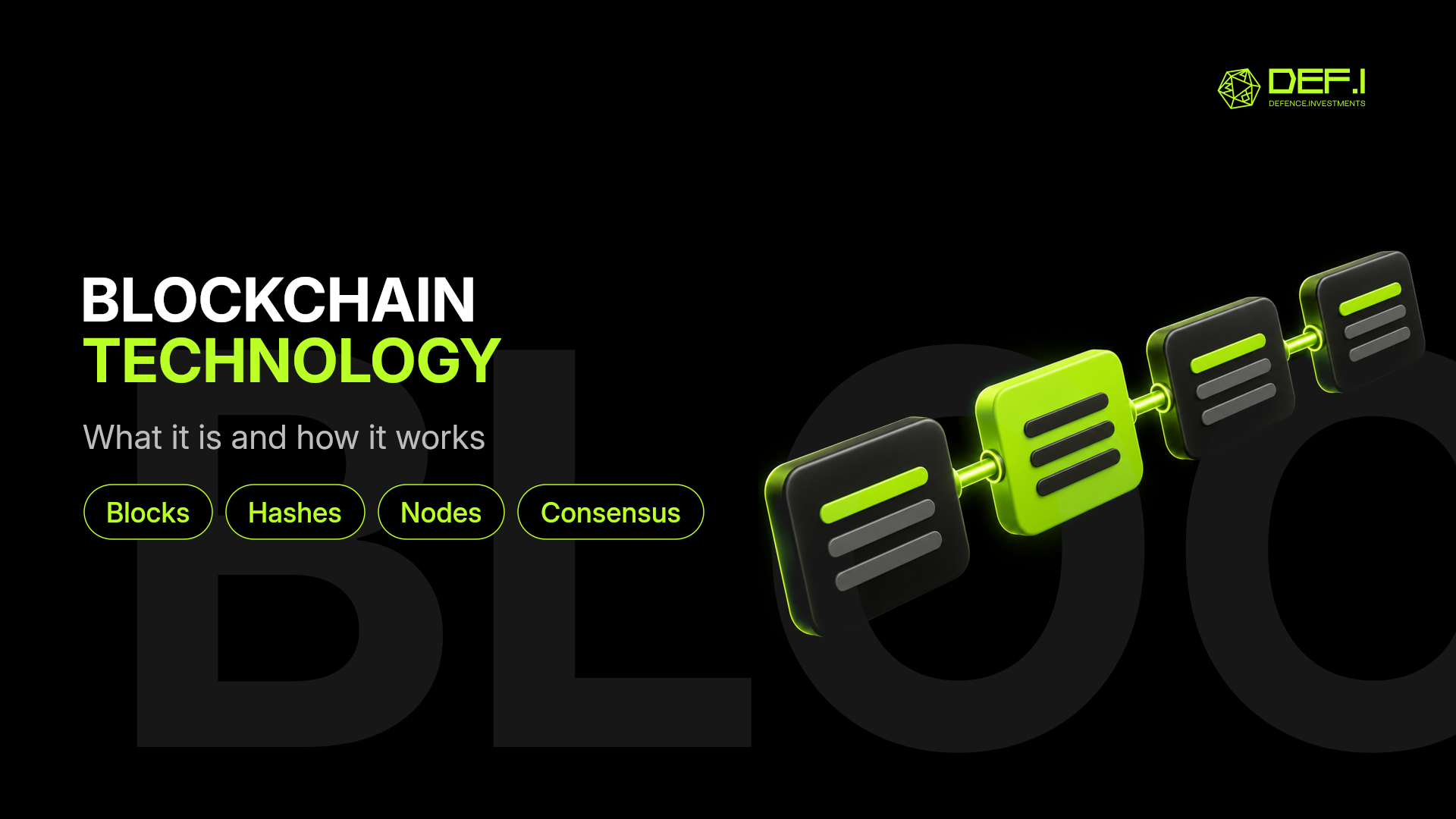
What Is a Blockchain System and How Does It Work
Contents
Blockchain is a distributed database whose records cannot be changed retroactively. The data is stored by thousands of network participants at the same time, and each block is cryptographically linked to the previous one. This article explains how the technology works, where it is used and what risks it carries.
What Is Blockchain in Simple Terms
Blockchain is a chain of blocks containing records. Each block stores data and a link to the previous block. That link is the foundation of the technology.
The word itself means a "chain of blocks." The technology lets you store data without a single center. Copies of the ledger are held by all network participants.
A ledger is a journal of records of all operations. In a classic system, one organization keeps that journal. In a blockchain, thousands of independent computers keep it.
The main property of the technology is that records are immutable. Once written, a record cannot be deleted or quietly rewritten. This is what sets blockchain apart from familiar databases.
The Shared Notebook Analogy
Imagine a shared notebook held by a thousand people at once. Each person has their own copy of this notebook. Any new entry appears for everyone at the same time.
To forge an entry, you would have to change every copy. Doing that in secret is practically impossible. Most participants would notice the discrepancy immediately.
This is exactly how a distributed ledger works. There is no single center that can be compromised. The data is protected by the very fact of mass copying.
How Blockchain Differs From a Regular Database
A regular database is managed by a single administrator. They can change or delete any record. This is a centralized model of storing information.
Blockchain is built differently and provides decentralization. The main differences from a classic database:
- data is stored by many participants, not on one server;
- records are cryptographically protected and linked into a chain;
- changing a past record retroactively is practically impossible;
- there is no single owner controlling the whole ledger;
- new operations are verified by the community, not by one center.
This structure provides transparency and resilience. The network keeps working even if some nodes fail. That is the key advantage of the distributed approach.
How a Block Is Built
A block is a container with records and service information. Each block is linked to the previous one, so the chain cannot be broken unnoticed. The chain of blocks is assembled from such links.
What a Block Contains
A block contains a set of data for a certain period of time. Besides the records themselves, it stores service fields.
What a block contains:
- a list of transactions for a certain period of time;
- its own hash - a string of fixed length;
- the hash of the previous block;
- a timestamp of creation;
- service fields with network parameters.
This structure is the same for most blockchains. It is the link through hashes that turns separate blocks into a single chain. Each next block relies on the previous one.
Hash and Hashing
A hash is the result of a cryptographic function. It turns data of any size into a string of fixed length. This process is called hashing.
Identical data always produces an identical hash. Changing even a single character completely changes the result. The new hash will not resemble the old one.
A hash works like a digital fingerprint of the data. You cannot restore the original content from it. The function works in only one direction.
Cryptographic functions underlie network security. They guarantee the integrity of every record. Data cannot be forged without changing the hash.
The Merkle Tree
A Merkle tree is a way to collapse many transactions into a single hash. Transactions are combined in pairs, and a shared hash is calculated for each pair.
Then the hashes of the pairs are combined in pairs again. The process repeats until a single root value remains. This value is called the Merkle root.
This method makes data verification faster. There is no need to go through all transactions one by one. It is enough to compare compact hashes at different levels.
Why a Record Cannot Be Changed Retroactively
Each block stores the hash of the previous block. Blocks are arranged in a strict sequential chain. This is the key mechanism that protects records.
If you change data in an old block, its hash changes. Then the link in the next block no longer matches. The whole chain after that point becomes invalid.
To hide the tampering, you would have to recalculate all subsequent blocks. You would have to do it simultaneously on most nodes of the network. In practice, such an attack is technically almost impossible.
It is the link between blocks through hashes that ensures immutability. Old records are effectively protected by the whole length of the chain. The more blocks on top, the stronger the protection.
How a Blockchain Network Works
A blockchain network consists of many independent computers. They store copies of the ledger and verify operations. There is no single server in such a network.
Nodes and the Distributed Ledger
A node is a computer connected to the blockchain network. Each node stores a full or partial copy of the ledger. Nodes exchange data directly using the P2P principle.
A distributed ledger means data is stored at all nodes at once. When a new block appears, all participants receive it. Copies of the ledger synchronize with each other.
This architecture gives high resilience. The failure of individual computers does not stop the network. As long as part of the nodes are working, the ledger remains available.
How a Transaction Works - Step by Step
A transaction is a record of a transfer of value or data. It goes through several mandatory stages.
Steps of a transaction:
- The user creates a transaction in their wallet.
- The transaction is signed with the sender's private key.
- The data is sent to the network and reaches the nodes.
- Nodes verify the signature and the correctness of the operation.
- Verified transactions are collected into a new block.
- The network confirms the block according to the consensus rules.
- The new block is added to the chain for all participants.
After the block is added, the transaction is considered complete. It can no longer be canceled or changed. The recipient sees the funds at their address.
Private and Public Keys
A private key is the secret code of the address owner. It is used to sign transactions. The private key must be kept secret.
A public key is created from the private one mathematically. The address in the network is formed from the public key. This address can be freely shared with others.
The key pair works on the principle of a digital signature. The sender signs the transaction with the private key. Any participant verifies the signature with the public key.
This scheme confirms the authenticity of an operation. Nobody can spend someone else's funds without the private key. Losing the key means losing access to the assets.
Consensus Algorithms
Consensus is the way a network agrees on a new block. The consensus algorithm determines who adds the next block. Without it, participants could not agree on the records.
Different networks use different algorithms. Three main mechanisms are covered below. Each solves the problem of agreement in its own way.
Proof of Work
Proof of Work is a proof-of-work algorithm. Network participants compete to solve a computational problem. Whoever finds the solution first is called a miner.
Miners search for a number that produces the correct block hash. This requires a lot of computing power and electricity. The first to find it gets the right to add the block and a reward.
This is exactly how Bitcoin works. Proof of Work provides high network security. The drawback of the method is large energy consumption.
Proof of Stake
Proof of Stake is a proof-of-stake algorithm. The right to create a block depends on the number of coins a participant holds. Such a participant is called a validator.
A validator locks part of their coins as collateral. The network chooses the block creator taking the size of the stake into account. For honest work, the validator receives a reward.
Proof of Stake requires almost no computing resources. Energy consumption here is many times lower. The Ethereum network works on this principle after moving to Proof of Stake in 2022.
Delegated Proof of Stake
Delegated Proof of Stake is a delegated proof of stake. Participants vote for a small number of delegates. Delegates create blocks on behalf of the entire network.
Users give their votes in proportion to their coin holdings. The chosen delegates verify transactions and add blocks. If they break the rules, the community can re-elect them.
DPoS provides high transaction processing speed. Blocks are created faster than in classic Proof of Stake. The price of speed is lower decentralization.
Below is a comparison of the three consensus algorithms. The table shows the principle, speed and energy consumption of each.
| Algorithm | Principle | Speed | Energy consumption |
|---|---|---|---|
| Proof of Work (PoW) | Miners solve a computational problem | Low | Very high |
| Proof of Stake (PoS) | Right based on the validator's stake | Medium | Low |
| Delegated Proof of Stake (DPoS) | Voting for delegates | High | Low |
The choice of algorithm depends on the goals of the network. Some projects put security above speed. Others choose performance and low costs.
Types of Blockchain Networks
Blockchain networks differ in the level of access. The type of network determines who can participate. There are three main models.
Public
A public blockchain is open to any user. Anyone can join the network and read the data. No permission from an administrator is required.
Public networks include Bitcoin and Ethereum. Such networks provide maximum transparency and decentralization. The data is visible to all participants without restrictions.
Private
A private blockchain works inside a single organization. A limited circle of participants has access to the network. Such a network is managed by a central owner.
Private networks are used for a company's internal tasks. They provide speed and control over data. Transparency here is lower than in public networks.
Consortium
A consortium blockchain is managed by a group of organizations. Several companies jointly maintain a shared ledger. This model is also called closed or corporate.
Consortium networks suit industry associations. For example, for banks or logistics companies. Decisions are made by a council of consortium members.
Smart Contracts
A smart contract is a program recorded in the blockchain. It automatically executes the terms of a deal. No intermediaries are required.
A smart contract works on the "if - then" rule. When the condition is met, the program performs the action itself. For example, it transfers funds to the recipient after payment.
The smart contract code is stored in the network and visible to participants. It usually cannot be changed after launch. This guarantees that the terms are executed without trusting the parties.
Smart contracts underlie many digital products. DeFi services and tokens are built on them. The technology makes it possible to automate complex financial operations.
Where the Technology Is Used
Blockchain is used far beyond cryptocurrencies. The technology solves problems in different areas of business. The main areas of application are covered below.
Cryptocurrencies and Digital Money
Cryptocurrencies are the first and best-known use. Bitcoin became the first digital currency on a blockchain. Records of transfers are stored in a distributed ledger.
Cryptocurrencies let you transfer value without banks. Transactions go directly between network participants. A separate class is stablecoins, pegged to ordinary currencies.
Finance and Payments
In finance, blockchain speeds up transfers and reduces fees. A payment goes through without a chain of intermediaries. This is especially noticeable in international operations.
The technology is used for settlements between companies. It increases the transparency and speed of payments. Financial organizations are testing blockchain for their products.
Logistics and Supply Chains
In logistics, blockchain records the movement of goods. Each stage of the route is written to a shared ledger. All participants in the supply chain see the same data.
This approach reduces errors and counterfeits. The origin of goods can be verified at any time. This increases trust between supplier and buyer.
Document Management and Digital Assets
Blockchain is used to store documents and signatures. A record of a document cannot be forged or deleted. This simplifies verifying the authenticity of information.
The technology makes it possible to create digital assets and tokens. A token confirms the right to an object or a share. This is how real estate, art and other assets are digitized.
Advantages and Disadvantages
The technology has strengths and limitations. Blockchain should be assessed on both. The table below shows the main pros and cons.
| Advantages | Disadvantages |
|---|---|
| Immutable records and protection against forgery | Limited transaction processing speed |
| Decentralization and no single center | High energy consumption in Proof of Work networks |
| Transparency of operations for participants | Difficulty scaling as load grows |
| Resilience to the failure of individual nodes | The user bears responsibility for losing the private key |
| Automation of deals through smart contracts | Immature legal regulation in many countries |
The advantages make the technology useful for business. The disadvantages limit its use in certain tasks. The choice depends on the specific goals of the project.
Risks and Security
Blockchain is protected by cryptography, but it does not provide absolute security. The main risks come from users and rare attacks. It is important to understand them in advance.
Phishing and Loss of Keys
Phishing is an attempt to trick someone into giving up data. The attacker creates fake websites and emails. The goal is to obtain a private key or a wallet password.
Losing a private key means losing access to the funds. A key cannot be recovered through support. That is why it is important to keep a backup in a safe place.
Basic protection measures reduce these risks:
- keep the private key in secure storage;
- check website addresses before entering data;
- do not share the key or password with third parties;
- use hardware wallets for large amounts.
The 51% Attack
A 51% attack is possible when one participant controls most of the power. They obtain most of the network's computing resources. This gives them the ability to influence block recording.
In such an attack, the attacker can carry out a double spend. The same coins are spent twice. In large networks, such an attack is extremely expensive and unlikely.
The more independent participants there are, the lower the risk. Large public networks are well protected against a 51% attack. Small networks with little power are more vulnerable.
Legal Status in Russia
The legal status of the technology in Russia is gradually taking shape. The law distinguishes blockchain technology from cryptocurrencies as assets. The technology itself is legal and is used in business.
The circulation of digital assets is regulated by separate laws. The state is introducing rules for operations with cryptocurrencies. Requirements for market participants continue to be refined.
The legal section is described as of October 2026. Legislation changes, so details should be checked in up-to-date sources. This material is not legal advice.
History: From Satoshi Nakamoto to Today
The idea of a protected chain of blocks appeared as early as 1991. Researchers described a way to timestamp documents. Records were linked in such a way that they could not be forged.
In 2008, a paper on Bitcoin was published under the name Satoshi Nakamoto. The author described a system of electronic money without intermediaries. The true identity of Satoshi Nakamoto is still unknown.
In January 2009, the Bitcoin network was launched. The first block and the first transactions appeared. That is how blockchain technology got its first working application.
Later, new networks with expanded capabilities emerged. Ethereum added smart contracts and programmable applications. Today the technology is developing in finance, logistics and other industries.
Frequently Asked Questions
What is blockchain in simple terms?
Blockchain is a chain of blocks containing records. Data is stored by many network participants at the same time. Changing a past record retroactively is practically impossible.
How is blockchain different from a regular database?
A regular database is managed by one center. Blockchain stores copies of the ledger with all participants. Records are linked cryptographically and protected against tampering.
What is a hash in blockchain?
A hash is a fixed-length string produced from data. It works as a digital fingerprint of a block. Changing the data completely changes the hash value.
How does a transaction work in a blockchain?
The user creates a transaction and signs it with a private key. Network nodes verify the signature and the correctness of the operation. Then the transaction goes into a new block of the chain.
How is Proof of Work different from Proof of Stake?
Proof of Work requires miners to solve a computational problem. Proof of Stake grants the right based on the size of the validator's stake. The second method uses much less energy.
What is a smart contract?
A smart contract is a program inside a blockchain. It executes the terms of a deal by itself, without intermediaries. For example, it transfers funds once a condition is met.
Can a blockchain be hacked?
Changing data in a large network is practically impossible. The main risks come from phishing and lost keys. Small networks are more vulnerable to a 51% attack.
Is blockchain legal in Russia?
The blockchain technology itself is legal in Russia. The circulation of digital assets is regulated by separate laws. Current requirements should be checked in legal sources.
Planning a project on blockchain? The Defence.Investments team does blockchain development: from smart contracts and wallets to crypto exchanges.
 0
0 1
1
 October 9, 2026






Comments 0